James Mant, CEO at Spero-ai | APAA Advocacy Team
30 June 2026
Foreword
Australia’s development approvals system is central to delivering many of the nation’s most important priorities, including housing, infrastructure, investment and liveable communities.
Across Australia, governments, industry and communities are seeking a system that is faster, more consistent and more transparent. While planning policy reform remains important, many of the greatest opportunities now lie within the approvals process itself.
Administrative complexity, fragmented workflows, inconsistent information requirements and coordination across multiple organisations are increasing costs and slowing delivery. These challenges affect councils, referral authorities, developers, consultants and ultimately the communities they serve.
Recognising this opportunity, APAA partnered with Spero-ai to facilitate a national discussion on how collaboration, innovation and better ways of working can improve the development approvals system. The message from participants was remarkably consistent. The sector is not calling for technology for its own sake. It is calling for better coordination, better information, stronger collaboration and practical improvements that allow skilled professionals to focus on delivering better planning outcomes.
This paper summarises those findings and proposes a practical roadmap for collaborative action.

Executive Summary
Australia’s development approvals system is under increasing pressure to support housing delivery, infrastructure investment and economic growth while responding to growing community expectations and increasing regulatory complexity.
Although planning reform remains important, APAA’s consultation indicates that many of the greatest opportunities for improvement lie within the approvals process itself.
The evidence points to a system where delays frequently occur because information moves inefficiently between organisations. Multiple requests for information, fragmented referral processes, inconsistent communication and growing administrative requirements consume significant professional time across both government and industry.
The consultation identified five consistent findings.
- Coordination between organisations is now one of the largest sources of delay.
- Administrative burden is reducing professional capacity.
- Better communication and information sharing would improve system performance.
- Trust is essential for successful innovation.
- Collaboration is the preferred pathway for future reform.
Collectively, these findings suggest that the next phase of reform should focus on building shared capability across the development approvals system rather than improving individual organisations in isolation.
This paper recommends four practical actions, and APAA is keen to be part of these initiatives.
- Establish an Development Approvals Innovation Taskforce.
- Deliver collaborative pilot projects targeting high-friction approval processes.
- Develop national principles for trusted innovation.
- Improve information standards across the development approvals system.
Together, these initiatives provide a practical pathway towards a faster, more transparent and better-connected approvals system.
1. The Challenge
Development approvals underpin housing delivery, employment, infrastructure investment and the creation of great places. However, increasing complexity has resulted in growing administrative burden across the approvals system. Councils, referral authorities, applicants and consultants all report increasing effort managing information, coordinating multiple organisations and navigating increasingly complex workflows. While policy settings continue to evolve, many of today’s delays arise through fragmented processes rather than planning decisions themselves.
As a result, highly skilled professionals increasingly spend time managing documentation, referrals and administrative coordination instead of applying professional judgement to assessment, problem solving and decision-making. Improving the way information moves through the system represents one of the greatest opportunities to improve productivity without compromising planning outcomes.
Key Message
The greatest opportunities now lie in improving coordination, information flow and administrative efficiency across the approvals process.
2. What We Heard
The consultation demonstrated a high level of consistency across stakeholder groups. Participants from local government, industry and related organisations identified similar challenges regardless of their role within the approvals process. The strongest themes included:
- Delays associated with referral coordination
- Inconsistent information requirements
- Repeated requests for additional information
- Fragmented communication between organisations
- Increasing administrative workload.
These findings reinforce that many inefficiencies occur at organisational interfaces rather than within individual organisations. Improving these interfaces has the potential to deliver system-wide benefits for all participants.
Key Message
Better coordination between organisations represents one of the largest opportunities to improve development approvals.
3. The Opportunity
Participants expressed strong support for practical innovation that reduces administrative friction while strengthening professional capability. Importantly, discussion focused on outcomes rather than technology itself. Innovation should enable professionals to spend more time on assessment, collaboration, design and decision-making, while reducing effort associated with repetitive administrative tasks.
Opportunities exist throughout the approvals lifecycle, including:
- Pre-lodgement guidance
- Application quality and completeness
- Referral coordination
- Information management
- Workflow automation
- Post-permit administration.
The objective is not simply to digitise existing processes but to redesign them to improve how information is created, shared and managed across organisations.
Key Message
Technology should support professional judgement, not replace it.
4. Building Trust
The role of government is shifting from regulator to facilitator and participant in housing delivery.
Key initiatives include planning reform implementation, the Development Facilitation Program, government land activation, public-private partnerships, and intervention models observed in other jurisdictions.
Housing delivery is a multi-system coordination challenge, requiring integration across planning, infrastructure, finance, and construction.
5: The Missing Middle and Changing Housing Models
Trust emerged as one of the strongest themes throughout the consultation. Participants recognised the potential benefits of innovation but emphasised that successful implementation depends on confidence in both the process and the outcomes. Future initiatives should be underpinned by clear governance principles including:
- Human oversight
- Transparency
- Accountability
- Security
- Auditability
- Evidence-based implementation
Embedding these principles from the outset will help build confidence across government, industry and the community.
Key Message
Trust is the foundation upon which successful innovation will be built.
5. Collaboration as the Enabler
No single organisation can resolve these challenges alone. The approvals process operates across multiple organisations, disciplines and jurisdictions. Meaningful improvement therefore requires collaborative leadership and shared ownership.
Participants strongly supported APAA playing a convening role by bringing together government, industry, referral authorities and innovation partners to identify common priorities and test practical solutions. This collaborative approach enables lessons learned through pilot projects to be shared nationally and adapted across jurisdictions.
Key Message
Shared challenges require shared capability.
6. Recommendations
Recommendation 1 – Establish a Development Approvals Innovation Taskforce
Create a national forum involving local government, state government, referral authorities, industry and innovation partners to identify common challenges, coordinate pilot projects and develop shared approaches to implementation.
Recommendation 2 – Deliver Collaborative National Pilot Projects
Undertake practical pilot projects focused on improving:
- Application quality before lodgement
- Referral coordination
- Application tracking
- Information sharing
- Administrative workflow efficiency.
Pilot projects should focus on measurable outcomes that can be scaled across the sector.
Recommendation 3 – Develop National Principles for Trusted Innovation
Publish a common framework for future innovation covering:
- Human oversight
- Transparency
- Accountability
- Security
- Auditability
- Evidence-based implementation
Recommendation 4 – Improve Information Standards
Work collaboratively to improve consistency across:
- Referral requirements
- Application information
- Terminology
- Document standards
- Data exchange between organisations.
More consistent information standards will reduce duplication, improve application quality and support more efficient approvals.
Conclusion
The consultation identified broad agreement on both the challenges facing Australia’s development approvals system and the direction of future reform. The strongest message was not a call for more technology. It was a call for better coordination, stronger collaboration and improved information flow across the approvals process.
Australia does not lack planning expertise. It lacks a development approvals system that consistently enables that expertise to operate efficiently. By building shared capability across government, industry and referral authorities, there is an opportunity to reduce administrative friction, improve productivity and create a faster, more transparent and more collaborative approvals system.
The next step is not further discussion. It is collaborative action. APAA is well placed to bring the sector together, coordinate practical pilot projects and help shape the next generation of development approvals reform.
Appendix A – Consultation Results and Charts
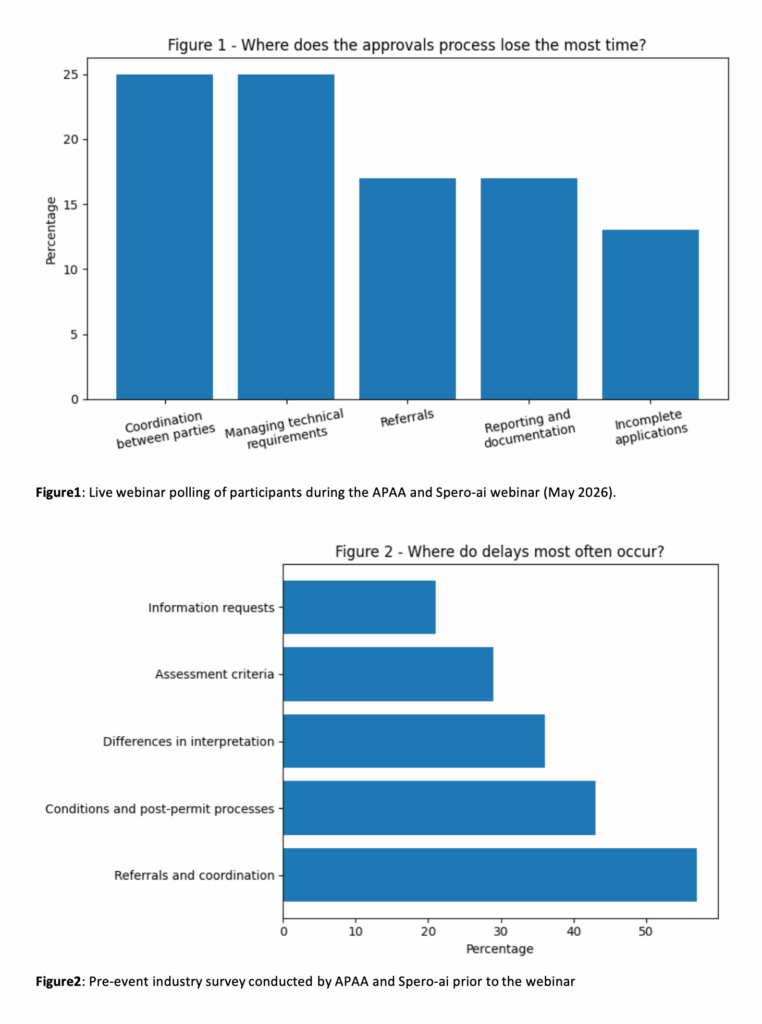
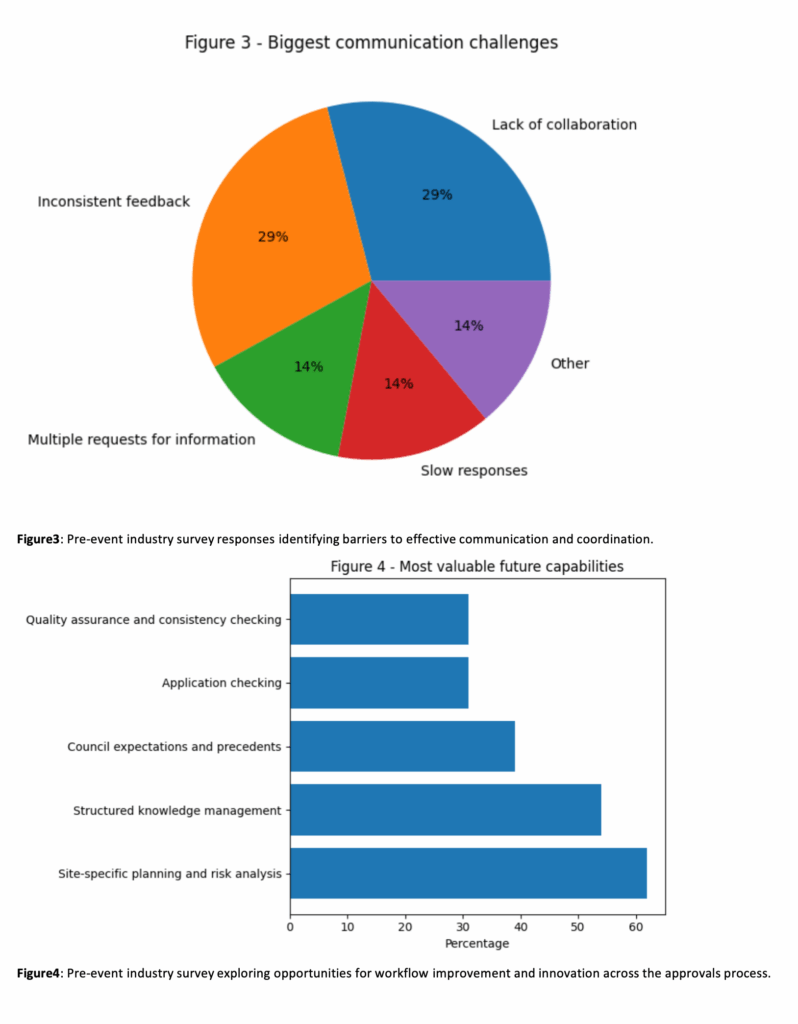
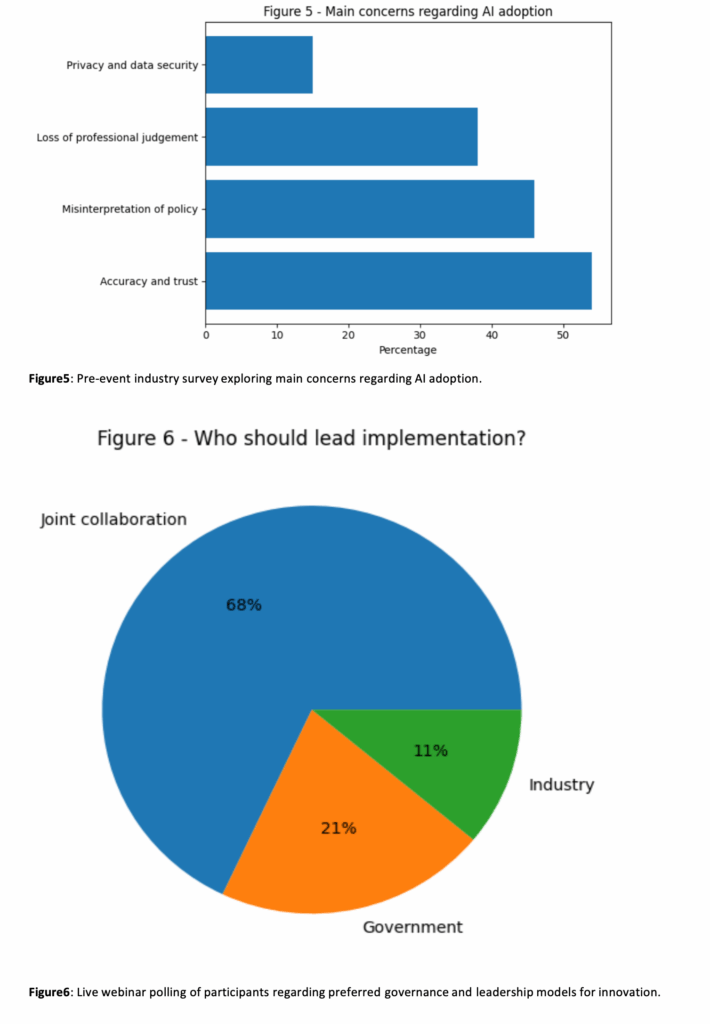
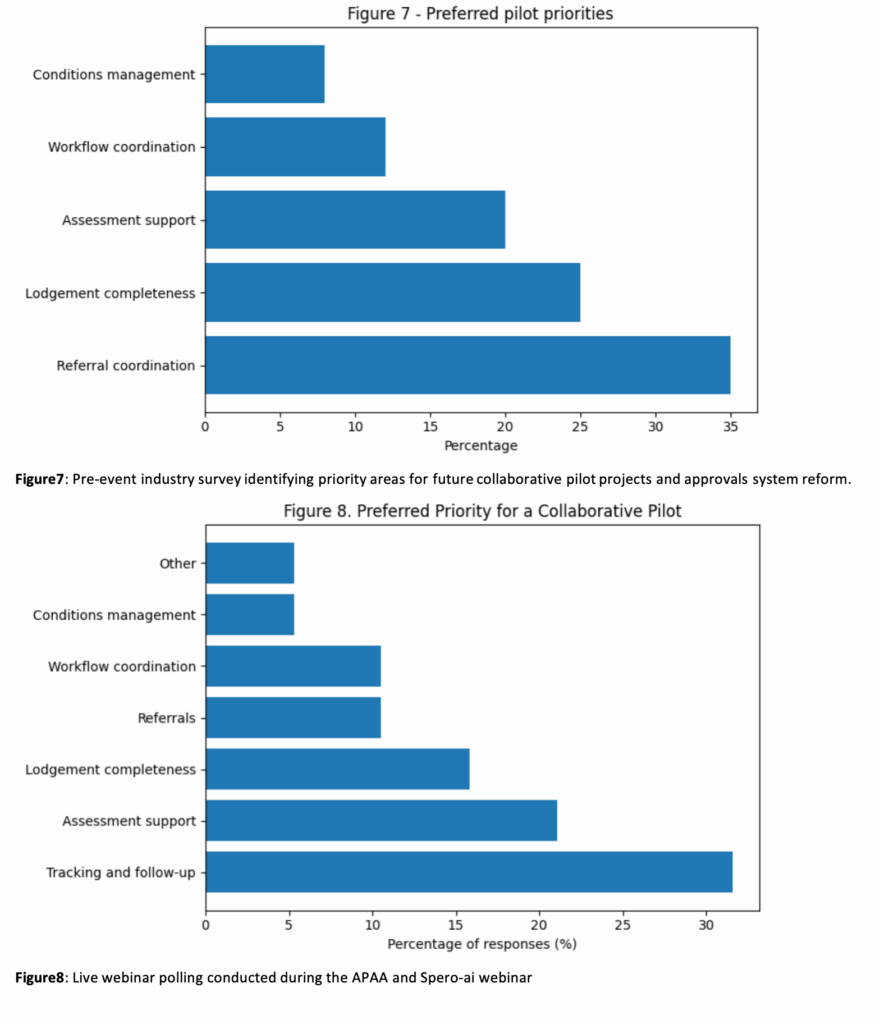
This appendix consolidates the survey charts and webinar polling results referenced throughout the white paper.